Domain gruppenblogs.de kaufen?
Wir ziehen mit dem Projekt
gruppenblogs.de um.
Sind Sie am Kauf der Domain
gruppenblogs.de interessiert?
domain@kv-gmbh.de · 0541-91531010
Domain gruppenblogs.de kaufen?
Was bedeutet "te quiero pero no te amo"?
"Te quiero pero no te amo" bedeutet auf Deutsch "Ich mag dich, aber ich liebe dich nicht". Es drückt aus, dass man Gefühle für die Person hat, aber nicht die tiefe Liebe empfindet, die für eine Beziehung notwendig wäre. Es kann bedeuten, dass man die Person schätzt und gerne Zeit mit ihr verbringt, aber keine romantischen Gefühle hat. **
Was ist der Unterschied zwischen "te amo" und "te quiero"?
"Te amo" und "te quiero" sind beides Ausdrücke der Liebe auf Spanisch, aber sie haben unterschiedliche Bedeutungen und Intensitäten. "Te amo" bedeutet "Ich liebe dich" und wird normalerweise für eine tiefere, romantische Liebe verwendet. "Te quiero" bedeutet "Ich mag dich" oder "Ich habe dich gern" und wird oft für eine liebevolle Zuneigung zu Freunden, Familienmitgliedern oder Partnern verwendet, ohne unbedingt romantisch zu sein. **

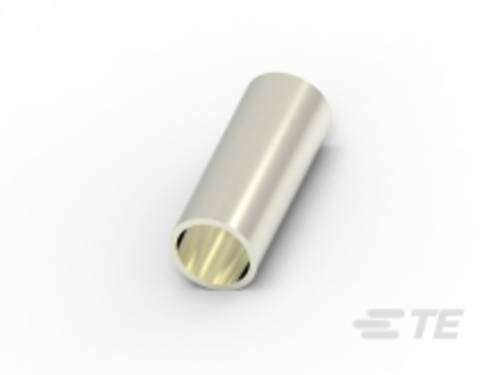
Ähnliche Suchbegriffe für TE-Connectivity-Infotainment-Connectors
Top-Angebote
Produkte zum Begriff TE-Connectivity-Infotainment-Connectors:
-
Raue, Benjamin: Act on Copyright Content Sharing Service ProvidersAct on Copyright Content Sharing Service Providers , The Book The Urheberrechts-Diensteanbieter-Gesetz (UrhDaG) is the German implementation of the controversial Art. 17 Directive 2019/790 (Copyright in the Digital Single Market, DSDM). Germany has decided against a minimum effort implementation and resisted the temptation to just incorporate the wording of the Directive more or less literally into the German Copyright Act (UrhG). Instead, it has opted for a comprehensive implementation in a stand-alone act, including: an extensive definition of an OCSSP with a safe-harbour clause for excluded service providers a detailed provision specifying the obligation to acquire contractual rights of use several provisions on direct remuneration for authors, performers and photographers very detailed provisions balancing between the obligation to preventively block copyright infringing material and the users' rights to freedom of expression and information which more or less anticipated (and likely influenced) the CJEU's decision Poland/Parliament and Council, including a section on uses presumably authorised by law a redress system consisting of complaints procedures and an alternative dispute resolution mechanism detailed obligations for measures against abuse rights of information for rightholders and for the purpose of scientific research The commentary of each article is headed by the current version of the article both in the German original and an English translation followed by a clearly and uniformly structured analysis of the provision including the extensive (academic) discussion that accompanied the implementation procedure. The interplay of the UrhDaG with the German Copyright Act is addressed as well as the respective requirements of the DSMD. The impact of the CJEU's first decision on Art. 17 DSDM (Poland/Parliament and Council) is discussed in the relevant provisions. As Art. 17 DSDM has been implemented very heterogeneously in the Member States, further decisions of the CJEU are to be expected. The detailed German implementation might serve as a reference and source of inspiration for the further specification of Art. 17 DSDM. The commentary aims to meet the expectations both of German and foreign lawyers interested in platform regulation and copyright by providing a detailed explanation both of the German implementation and, by that, of Art. 17 DSMD. The Advantages at a Glance Article-by-Article Commentary in English language clearly and uniformly structured analysis of each provision The Target Group For German and foreign Copyright lawyers. , Tagfahrleuchten > Beleuchtung , Auflage: 1. Auflage, Erscheinungsjahr: 20240527, Produktform: Kartoniert, Autoren: Raue, Benjamin~Specht-Riemenschneider, Louisa, Auflage: 24001, Auflage/Ausgabe: 1. Auflage, Seitenzahl/Blattzahl: 170, Keyword: Content Sharing; Copyright; Service Providers, Fachschema: Handelsrecht~Unternehmensrecht~Wettbewerbsrecht - Wettbewerbssache, Warengruppe: HC/Handels- und Wirtschaftsrecht, Arbeitsrecht, Fachkategorie: Gesellschafts-, Handels- und Wettbewerbsrecht, allgemein, UNSPSC: 49019900, Warenverzeichnis für die Außenhandelsstatistik: 49019900, Verlag: C.H. Beck, Verlag: C.H. Beck, Verlag: Verlag C.H. Beck oHG, Blätteranzahl: 184 Blätter, Länge: 239, Breite: 160, Höhe: 13, Gewicht: 368, Produktform: Kartoniert, Genre: Sozialwissenschaften/Recht/Wirtschaft, Genre: Sozialwissenschaften/Recht/Wirtschaft,90,00 €*Versand: 0,00 €Sichere Weiterleitung zum Anbieter




-
Französisch: "Te oder toi?"
Die Frage "Te oder toi?" bezieht sich auf die Anredeform im Französischen. "Te" ist die informelle Form, die man unter Freunden oder Gleichaltrigen verwendet, während "toi" die formelle Form ist, die man bei älteren Personen oder in förmlichen Situationen verwendet. **
-
¿Qué te gusta mucho?
Me gusta mucho leer libros y pasar tiempo al aire libre. También disfruto mucho de la música y de viajar a nuevos lugares. **
-
¿Te gusta el español?
Sí, me gusta el español. Es un idioma hermoso y me encanta poder comunicarme en él. Además, aprender español me ha permitido conocer más sobre la cultura hispana y disfrutar de su música, literatura y cine. **
-
Wie kann Connectivity dazu beitragen, die Effizienz von Unternehmen zu verbessern? Inwieweit beeinflusst Connectivity die zwischenmenschliche Kommunikation und Interaktion?
Connectivity ermöglicht eine nahtlose Kommunikation und Zusammenarbeit zwischen Mitarbeitern, was die Effizienz von Unternehmen steigert. Durch die Vernetzung von Geräten und Systemen können Prozesse automatisiert und optimiert werden. Jedoch kann eine übermäßige Nutzung von digitalen Kommunikationsmitteln die persönliche Interaktion beeinträchtigen und zu Missverständnissen führen. **

Warum steht te vor Iod?
Te steht vor Iod, da es sich um ein nichtmetallisches Element handelt, das in der 7. Hauptgruppe des Periodensystems steht. Nichtmetalle haben tendenziell höhere Elektronegativitätswerte als Metalle, was bedeutet, dass sie Elektronen stärker anziehen. Da Iod ein Halogen ist und eine hohe Elektronegativität aufweist, bildet es gerne Bindungen mit Elementen, die Elektronen abgeben können, wie zum Beispiel Te. Dadurch entsteht eine Iodidverbindung, in der Iod eine negative Ladung trägt. **
Zaz, je veux te fragen.
Bien sûr, pose-moi ta question. Je suis là pour y répondre. **
Top-Angebote
Produkte zum Begriff TE-Connectivity-Infotainment-Connectors:
-
Raue, Benjamin: Act on Copyright Content Sharing Service ProvidersAct on Copyright Content Sharing Service Providers , The Book The Urheberrechts-Diensteanbieter-Gesetz (UrhDaG) is the German implementation of the controversial Art. 17 Directive 2019/790 (Copyright in the Digital Single Market, DSDM). Germany has decided against a minimum effort implementation and resisted the temptation to just incorporate the wording of the Directive more or less literally into the German Copyright Act (UrhG). Instead, it has opted for a comprehensive implementation in a stand-alone act, including: an extensive definition of an OCSSP with a safe-harbour clause for excluded service providers a detailed provision specifying the obligation to acquire contractual rights of use several provisions on direct remuneration for authors, performers and photographers very detailed provisions balancing between the obligation to preventively block copyright infringing material and the users' rights to freedom of expression and information which more or less anticipated (and likely influenced) the CJEU's decision Poland/Parliament and Council, including a section on uses presumably authorised by law a redress system consisting of complaints procedures and an alternative dispute resolution mechanism detailed obligations for measures against abuse rights of information for rightholders and for the purpose of scientific research The commentary of each article is headed by the current version of the article both in the German original and an English translation followed by a clearly and uniformly structured analysis of the provision including the extensive (academic) discussion that accompanied the implementation procedure. The interplay of the UrhDaG with the German Copyright Act is addressed as well as the respective requirements of the DSMD. The impact of the CJEU's first decision on Art. 17 DSDM (Poland/Parliament and Council) is discussed in the relevant provisions. As Art. 17 DSDM has been implemented very heterogeneously in the Member States, further decisions of the CJEU are to be expected. The detailed German implementation might serve as a reference and source of inspiration for the further specification of Art. 17 DSDM. The commentary aims to meet the expectations both of German and foreign lawyers interested in platform regulation and copyright by providing a detailed explanation both of the German implementation and, by that, of Art. 17 DSMD. The Advantages at a Glance Article-by-Article Commentary in English language clearly and uniformly structured analysis of each provision The Target Group For German and foreign Copyright lawyers. , Tagfahrleuchten > Beleuchtung , Auflage: 1. Auflage, Erscheinungsjahr: 20240527, Produktform: Kartoniert, Autoren: Raue, Benjamin~Specht-Riemenschneider, Louisa, Auflage: 24001, Auflage/Ausgabe: 1. Auflage, Seitenzahl/Blattzahl: 170, Keyword: Content Sharing; Copyright; Service Providers, Fachschema: Handelsrecht~Unternehmensrecht~Wettbewerbsrecht - Wettbewerbssache, Warengruppe: HC/Handels- und Wirtschaftsrecht, Arbeitsrecht, Fachkategorie: Gesellschafts-, Handels- und Wettbewerbsrecht, allgemein, UNSPSC: 49019900, Warenverzeichnis für die Außenhandelsstatistik: 49019900, Verlag: C.H. Beck, Verlag: C.H. Beck, Verlag: Verlag C.H. Beck oHG, Blätteranzahl: 184 Blätter, Länge: 239, Breite: 160, Höhe: 13, Gewicht: 368, Produktform: Kartoniert, Genre: Sozialwissenschaften/Recht/Wirtschaft, Genre: Sozialwissenschaften/Recht/Wirtschaft,90,00 €*Versand: 0,00 €Sichere Weiterleitung zum Anbieter
-
Was bedeutet "te quiero pero no te amo"?
"Te quiero pero no te amo" bedeutet auf Deutsch "Ich mag dich, aber ich liebe dich nicht". Es drückt aus, dass man Gefühle für die Person hat, aber nicht die tiefe Liebe empfindet, die für eine Beziehung notwendig wäre. Es kann bedeuten, dass man die Person schätzt und gerne Zeit mit ihr verbringt, aber keine romantischen Gefühle hat. **
-
Was ist der Unterschied zwischen "te amo" und "te quiero"?
"Te amo" und "te quiero" sind beides Ausdrücke der Liebe auf Spanisch, aber sie haben unterschiedliche Bedeutungen und Intensitäten. "Te amo" bedeutet "Ich liebe dich" und wird normalerweise für eine tiefere, romantische Liebe verwendet. "Te quiero" bedeutet "Ich mag dich" oder "Ich habe dich gern" und wird oft für eine liebevolle Zuneigung zu Freunden, Familienmitgliedern oder Partnern verwendet, ohne unbedingt romantisch zu sein. **
-
Französisch: "Te oder toi?"
Die Frage "Te oder toi?" bezieht sich auf die Anredeform im Französischen. "Te" ist die informelle Form, die man unter Freunden oder Gleichaltrigen verwendet, während "toi" die formelle Form ist, die man bei älteren Personen oder in förmlichen Situationen verwendet. **
-
¿Qué te gusta mucho?
Me gusta mucho leer libros y pasar tiempo al aire libre. También disfruto mucho de la música y de viajar a nuevos lugares. **
Ähnliche Suchbegriffe für TE-Connectivity-Infotainment-Connectors
-
¿Te gusta el español?
Sí, me gusta el español. Es un idioma hermoso y me encanta poder comunicarme en él. Además, aprender español me ha permitido conocer más sobre la cultura hispana y disfrutar de su música, literatura y cine. **
-
Wie kann Connectivity dazu beitragen, die Effizienz von Unternehmen zu verbessern? Inwieweit beeinflusst Connectivity die zwischenmenschliche Kommunikation und Interaktion?
Connectivity ermöglicht eine nahtlose Kommunikation und Zusammenarbeit zwischen Mitarbeitern, was die Effizienz von Unternehmen steigert. Durch die Vernetzung von Geräten und Systemen können Prozesse automatisiert und optimiert werden. Jedoch kann eine übermäßige Nutzung von digitalen Kommunikationsmitteln die persönliche Interaktion beeinträchtigen und zu Missverständnissen führen. **
-
Warum steht te vor Iod?
Te steht vor Iod, da es sich um ein nichtmetallisches Element handelt, das in der 7. Hauptgruppe des Periodensystems steht. Nichtmetalle haben tendenziell höhere Elektronegativitätswerte als Metalle, was bedeutet, dass sie Elektronen stärker anziehen. Da Iod ein Halogen ist und eine hohe Elektronegativität aufweist, bildet es gerne Bindungen mit Elementen, die Elektronen abgeben können, wie zum Beispiel Te. Dadurch entsteht eine Iodidverbindung, in der Iod eine negative Ladung trägt. **
-
Zaz, je veux te fragen.
Bien sûr, pose-moi ta question. Je suis là pour y répondre. **
* Alle Preise verstehen sich inklusive der gesetzlichen Mehrwertsteuer und ggf. zuzüglich Versandkosten. Die Angebotsinformationen basieren auf den Angaben des jeweiligen Shops und werden über automatisierte Prozesse aktualisiert. Eine Aktualisierung in Echtzeit findet nicht statt, so dass es im Einzelfall zu Abweichungen kommen kann. ** Hinweis: Teile dieses Inhalts wurden von KI erstellt.